Thursday, August 18, 2016

On The Outside Looking In


Deacon Tom Writes,
“On the Outside Looking In”


Today we find the Lord busy gathering people from all the nations, bringing them from east and west, north and south to recline at his table. All are invited to the feast. All are welcomed to the celebration; no reservations are required! Jesus, however, indicates that we have to do a little more than show up ready to eat. We need to acknowledge the invitation we receive to participate in God’s kingdom by sending back the R.S.V.P. Yes, it seems that we have to act on our desire to participate in this wonderful banquet the Lord has prepared for us by living good and wholesome lives.

It is so easy to say to ourselves that God loves us “Unconditionally” and then go on living lives unworthy of that love. Today’s gospel gives us cause to rethink this behavior. Jesus makes it clear that following him is difficult, therefore, the reference to the “narrow gate”. Those who are not “strong enough” to walk the narrow path, that is, those who live morally shallow or self-absorbed lives, find themselves “on the outside looking in” when it’s time to enjoy this great celebration the Master has prepared.

We all make choices in life, and all of the choices we make have consequences. We are so blessed to have the freedom to engage in virtually unlimited activity and to do pretty much as we please. With such great freedom, we run the risk of making the wrong choices and there can be dire consequences. Making bad choices that complicate our lives and create problems for ourselves and those we is tragic enough. What about the choices we make that threaten our eternal life? The image Jesus presents today drives home that point effectively.

We don’t want to miss out on eternal life, as hard as that is for us to imagine living, as we do, in a physical, material world. But we do know that St. Paul tries to describe it for us when he says, “What eye has not seen, and ear has not heard, and what has not entered the human heart, what God has prepared for those who love him."     (1 Cor. 2:9)

If we could only live each moment of our lives as if the banquet of eternal life was to begin tonight, we would never have to worry about being on the outside looking in!

Enjoy the day!
Deacon Tom

Image Credit: Becky Johnson - - On The Outside Looking In - steel and glass

Thursday, August 11, 2016

Between a Rock and a Hard Spot


Deacon Tom Writes,
“Between a Rock and a Hard Spot”


Jeremiah finds himself in a tight spot. He is accused of “demoralizing the soldiers who are left in the city”. The princes want to put him to death. The charges are correct: Jeremiah has been demoralizing the soldiers and all who remained in Jerusalem. Jeremiah disheartened the inhabitants of the city because he told them the truth…He spoke the words that God wanted them to hear… that everyone who remained in the city would die. It seems that the false prophets were telling the people that there was no need to worry, that everything would be fine; Jerusalem would be safe because their enemy would break off their siege and withdraw from the city. The false prophets were convincing because… the people wanted to believe them. They wanted to be lied to in order to keep the status quo and life as usual. The people wanted to continue on their evil ways and shun the prophet who spoke the Truth.

Well, as we read today, his enemies toss Jeremiah into a dry cistern so that he would die. But, God comes to his aid and Jeremiah is rescued and he continues to deliver the Word of God to a reluctant people.

Today the Word of God remains unfashionable. We turn our backs on him in order to pay homage to the false prophets of our day who say all the right words that keep us snug and comfortable in the cozy world we have fashioned around us. God’s Word calls us out from our comfort zone so we can find “life in the fullest” much like the words of Jeremiah called for the people of Jerusalem change their ways so they can live.

God’s Word is always relevant. It speaks to us today as it has to the people throughout the millennia. The challenge for us is to discern what God is saying and then to live life that way. That’s how we will find true happiness and dispense with the false prophets who would lead us astray.

Enjoy the day!
Deacon Tom

Thursday, August 4, 2016

First Things First


Deacon Tom Writes
“First Things First”


In today’s gospel Jesus touches upon a profound truth about our human condition when he says, “For where your treasure is, there also will be your heart”.  Jesus understands our human dynamic. He knows that we put our energy into the things we are most interested in and that we invest our time and resources pursuing the things that are most important to us. The things we like doing fill up our calendars and empty our wallets!! And that’s the way it should be.

It is interesting to note, however, that last week’s gospel was also a teaching about material things. If you recall Jesus told the parable about the rich man with the abundant harvest who tore down his barns and built bigger ones so he could store away his wealth, “…for many years”… so he could “…rest, eat, drink and be merry” for years to come.   It seems that our need to accumulate wealth beyond the needs for today as a measure of our success and to assuage our worries about the future is systemic to our human condition.

Jesus has many warnings about the problems or challenges concerning wealth. Here are a few you may recall: “Amen, I say to you, it will be hard for one who is rich to enter the kingdom of heaven” MT 19:23. And also, “Again I say to you, it is easier for a camel to pass through the eye of a needle than for one who is rich to enter the kingdom of God" MT 19:24. Or this one from Luke 6:24,“But woe to you who are rich, for you have received your consolation”.

I don’t believe Jesus is interested in having more “poor people” in the world. Heaven knows there are too many now! Jesus’ admonition is so that we don’t set our hearts on what we have, that we don’t identify ourselves and others by what we have or don’t have, or that we don’t judge people by their possessions or status. Jesus wants us to depend upon him for all our needs and for us to turn to him and trust in him to satisfy all those desires that he places within our hearts.

One sure way to know what God wants for us is for us to put him in our calendars. You know, like they say in the business world, “Let’s do lunch!”. Well, maybe not lunch, but we may be able to set some time aside for Adoration of the Blessed Sacrament where we can sit silently in the presence of our Lord and listen to what he has to say to us. That could very well be the most important activity of our week. From the spiritual perspective it is certainly a matter of getting around to first things first.

Enjoy the day!
Deacon Tom 

Wednesday, July 27, 2016

Real Wealth


Deacon Tom Writes,
“Real Wealth”


St. Paul instructs us to “Think of what is above, not what is on earth”.  Good, practical advice of our need to build a spiritual legacy but, unfortunately, one in direct conflict with our earthly way of thinking. Take the man in the parable today. He is not just successful; he is very successful. He is having a bumper crop and so he makes a decision to tear down the existing barns and build bigger ones so he can store much more of his harvest. Consequently, he will acquire more and more wealth to provide a safe and secure future for himself and his family. Yet, rather than being the poster child for ingenuity and entrepreneurial enterprise, this parable ends with this enterprising farmer standing before God (to whom we must all render an account) about his spiritual net worth, or lack thereof.

Jesus tells this parable in response to a request to settle a dispute over an inheritance problem an issue we might be tempted to think is a contemporary problem. Jesus understands the dispute; we are never satisfied. He seems to have put his finger on the crux of the problem - Greed! This parable is intended to remind us that we are more than what we possess.

Two-thousand years have passed and I don’t know if we have heeded Jesus’ warning about greed. The blockbuster movie “Wall Street” is nearly twenty years old. Remember the famous scene in which Gordon Gekko (Michael Douglas) spews that classic line -“Greed is good…greed in all of its forms has marked the upward surge of mankind”. Well, if nothing else, the past twenty years has dispelled that myth.  Oh, it has worked for the top 1%, but not for everyone else. We have all witnessed and experienced the horrific damage that greed has spawned around the world. It has shattered the lives and dreams of hundreds of millions of people. It has unleashed a cynicism and hopelessness that is running rampant today. It is causing discontent and worry in the hearts of many mothers and fathers seeking to improve the quality of life for their children. No, greed is not good. It is a capital sin, one that can ruin not only this life, but steal from us that eternal life that Jesus won for us by his death and resurrection.

St. Paul writes that our lives are, “hidden with Christ in God”.  If we place our hope and trust in him, we no longer have to, “store up treasures for” ourselves, for we can claim the inheritance Jesus has secured for us, eternal life that already has begun to run its course.

Enjoy the Day!
Deacon Tom 

Thursday, July 21, 2016

God's Mercy at Work


Deacon Tom Writes,
“God’s Mercy at work”


Today Abraham is like the little Dutch boy whose valiant effort of placing his finger in the hole of the dyke averts impending disaster. Abraham’s actions are directed at averting a disaster, a spiritual one, trying to hold back God’s wrath against the people of Sodom and Gomorrah. He knows that the residents of these towns have racked up a pile of sins, yet he appeals to God not to destroy the cities. Abraham cleverly invokes God’s mercy and seeks his forbearance not to bring destruction upon the inhabitants of these places should he find 50, no 45, AHHH 40, how about 30, 20 perhaps, OK 10 innocent people in these towns. Abraham is a gifted negotiator, a skilled plea bargainer. And God, at least for the time being is compelled to listen to him, withholding his punishment while Abraham seeks out the innocent. This, to me, is a wonderful sign of God’s patience with us, his disobedient children, and his willingness to give us every chance to get things right, even though we fail time and time again. In today’s first reading we learn that God’s justice is tempered by his mercy. In teachings about God’s mercy, we learn about our need to be merciful to each other also.

As the clock runs down on this Year of Mercy it is fitting to assess the progress we have made in our efforts to expand the depth and horizons of our capacity to be merciful.  How we engage other people, what we say to them, and how we say it can have a powerful impact on them.  I have found that just a few words of kindness can reshape a stress-contorted face into a smile.  If you have ever stopped and listened to someone who wasn’t having a good day and, by doing so cheered them up, you know it doesn’t take much to make someone’s day. If we have ever reconciled with someone who has hurt us or offended us in any way, we know the healing and peace that flows from God’s mercy. As little as these actions are, they are important ways of sharing God’s grace and making his mercy visible to those around us. God indeed has infused us with his mercy so that we may share his mercy with others. When we act as God’s agents we are instruments of his mercy just as Father Abraham was intermediating between the people of his day and God…And God listens, I believe, with our ears.

Pope Francis in his Easter Urbi et Orbi address stressed the point that only mercy can save the world. How does God’s mercy come into our world except through the lives and hands of those who love him? St. Teresa of Avila (1515 – 1582) was a living testimony of this truth. Her prayer is most fitting for us today.  She prayed, “Let nothing disturb your. Let nothing frighten you. All things pass. God does not change. Patience achieves everything. Whoever has God lacks nothing. God alone suffices. Christ has no body now on earth but yours; no hands but yours; no feet but yours; yours are the eyes thorough which the compassion of Christ must look lout on the world. Yours are the feet with which he is to go about doing good. Yours are the hands with which he is to bless his people”. 

There is need for God’s Mercy all around us and no hands or feet to help but ours.  

Enjoy the day!
Deacon Tom

Image from http://www.robparkersblog.com

Thursday, July 14, 2016

Hospitality Plus


Deacon Tom Writes,
“Hospitality Plus”


Abraham knew how to entertain. He extended a humble greeting and generous hospitality to the three travelers who passed his tent in the heat of the day. He provided them with water – such a necessity in the heat of the midday sun in. He instructed Sarah to bake some bread while he had a choice steer prepared for a meal. What a great host Abraham was! This is the sort of treatment we reserve for our closest friends. This is the way God treats us, his children.

This reading from the book of Genesis caused me to reflect on the hospitality of Jesus. In grounding the Eucharistic celebration in the context of a public banquet to which everyone is invited, Christ offers us hospitality not only for this life, but also for the life to come. Christ is our nourishment in the Eucharist banquet shared as though we are one big family invited to center our thoughts and actions on him and not be “anxious and worried about many things” as Martha was in our gospel. We all know that this is much more difficult to do than it sounds, don’t we? Our minds are constantly full of the needs of the day… the bills to pay, the stress at work and at home, sick parents or children, conflicting schedules… there are so many things to do and so many concerns weighing heavily on our minds that it is difficult to be aware of the Spiritual realities taking place before us at Mass. And yet, this is the best possible way for us to find some relief from the worries and anxieties that we face.

When we respond to the hospitality Jesus offers us, we gain new insight into the reality around us. This is why I believe that Paul can say, “rejoice in my sufferings for your sake”. Paul was able to connect with, “the mystery hidden from ages and from generations past” because he had experienced Jesus’ bountiful hospitality that eventually led him into an intimate relationship with Christ that enabled him to see beyond his physical pain and suffering.

As we gather for picnics and celebrations this summer, as we extend hospitality to our family, friends and neighbors, let us be mindful of the open invitation we have to break bread together with our friends and neighbors every time we go to Mass where Jesus has set a place for us at his Table and waits for us to share our fears, worries, and struggles with him.

Enjoy the Day!
Deacon Tom


Image Credit: The Hospitality of Abraham  - basilica of San Vitale in Ravenna, Italy on revsshaffer. com

Thursday, July 7, 2016

Help Is On The Way!


Deacon Tom Writes,
“Help Is On The Way!”


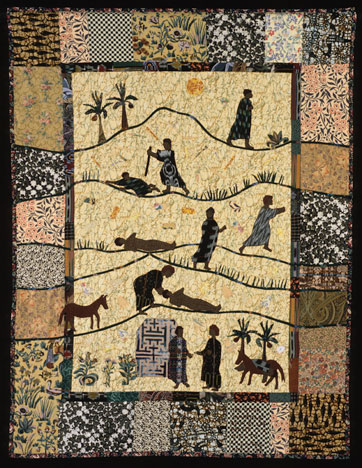
Today’s gospel tells the story of the Good Samaritan in which Jesus gives us a graphic example on how we must act to fulfill the greatest of the commandments. The Samaritan is a virtuous man; he acts with compassion, gentleness, generosity, humility, self-sacrifice, self-discipline, justice, courage, respect, and patience. His actions are unlike those of the priest and the Levite who ignore the victim on the side of the road and go on their merry way. 

Why do we do the things that we do? The simple answer is that we get in the habit behaving in a certain way. Habits are our way we respond to certain situations. I suspect helping others came naturally to the Samaritan. He had, as we say, a habit of lending a helping hand. We acquire habits through our repeated action. We start out behaving a certain way and, as we repeat those same actions, they become habits. Habits can be for the good or for the bad. Throughout our childhood, hopefully, we are taught to act with kindness so we can develop the habit of being kind. The same goes for being polite, courteous, friendly, and compassionate., etc. As we grow to maturity hopefully we have acquired greater capacity to act more virtuously. Our life’s activities reflect the qualities of our interior moral life – we are either acting according to the good virtues we have stored up or the vices that oppose them

The Greek word for virtue means “habitual excellence” which suggests that virtues need to be practiced constantly. St. Thomas Aquinas, the foremost proponent of an ethics of virtue, said that through repetition virtues bring about a “modification of a subject”. In other words, practicing virtue makes us virtuous.

The power of the virtues is that through their possession and exercise we reach the intended purpose of our lives which happens to be the very question the scholar of the law asks Jesus today, “Teacher, what must I do to inherit eternal life?”

To help us in our efforts to inherit eternal life, the Fathers of the Church have handed down some very good tools to help guide us. We have three “Theological” Virtues – Faith, Hope, and Charity and four “Cardinal” Virtues of Prudence, Fortitude, Justice, and Temperance. 

There is much suffering in our world today that cries out for an increase in the practice of these virtues by people of all faiths. May the story of the good Samaritan motivate us to live more virtuous lives so we can be more faithful to our Christian heritage and help ease the suffering of our sisters and brothers in Christ.

Enjoy the Day!
Deacon Tom


Image Credit – Lee Porter: The Good Samaritan 1, 1993