Showing posts with label God Calling. Show all posts

Friday, February 25, 2022

Eighth Sunday in Ordinary Time_C - The Truth of the Matter_022722


Deacon Tom Writes, 
“The Truth of the Matter” 

Eighth Sunday in Ordinary Time, Year C

 Do you recall the 1963 movie, “It’s a Mad Mad Mad Mad World? It was a farcical comedy that brought some levity into our relatively simple lives back then. Today it seems that movie title all too accurately describes the world we are now living in: Mad... Mad... Mad. Confirmation of this can be found by putting on the evening news.

We all witness vast corruption and scandal in our world and in our church; we see political divisions and factions in a constant state of tension with both sides yelling and no one listening; we see families in distress because of broken relationships, drug and alcohol addictions, and a new alienation caused by the proliferation of technology that places in our hands the entire spectrum the good, the bad and the ugly for all to peruse and make their choice. We are indeed living in incredible times, the best and the worst as Dickens would say.

Today’s readings direct provide guidance on the choices we face. There is a clear recognition that the world has a different standard by which to measure success than we find in the teachings of Jesus. We all know the standards for success the world embraces... The world is enthralled with power and success with all its entrapments such as, fame, fortune, the display of extravagant wealth and the lifestyle that goes along with it. The world rewards succeed regardless of the costs and no matter what principles or people have to be compromised along the way. Isn’t it interesting how easily the faults of the rich and the famous are overlooked? People with these qualities will rise to the top and stay there. Yes, they are driven individuals who will succeed no matter the cost.

Today’s gospel lays out a dramatically different standard for Jesus’ disciples. It is a very simple standard. It is one Jesus observed in the beauty of nature. “A good tree does not bear rotten fruit, nor does a rotten tree bear good fruit.” This is pure wisdom by which we can measure the integrity of those attempting to gain influence in our lives.

We are at a critical point in the history of the world. There are many powerful voices seeking to influence our spiritual, political, and economic lives. How do we decide what voices to listen to; how do we know what people to support for political office; what standard can we rely upon to help us navigate the world of commerce upon which we depend for our security, comfort, and quality of life?

The lesson from nature, and Jesus, is simple. Look at the fruit! “You don’t get figs from a thorn bushes, you don’t gather grapes from brambles.” What kind of fruit are we producing?

Enjoy the day!
Deacon Tom

Previous reflections can be found at: www.deacontomwrites.com

Photo- Dalia at Enders Island, Connecticut

Looking for a good read this Lent? Try “Life of the Beloved” by Henri Nouwen. 

Or check out the “Francis Effect Podcast” to keep up with current contemporary conversations happening in our church.

Thursday, February 17, 2022

Seventh Sunday in Ordinary Time_C - Be the Change_022022


Deacon Tom Writes,
“Be the Change”

 Seventh Sunday in Ordinary Time, Year C

Mahatma Gandhi, one of the great spiritual leaders of the twentieth century, lived and advised others seeking a better world to: “Be the change that you wish to see in the world.”

Twenty centuries earlier an itinerant preacher and prophet encouraged his followers to take a different approach to the wickedness of the world. It was a radical approach then... just as it was in Gandhi’s day; it was not just the road less traveled, but rather the road that had been inconceivable until Jesus introduced it. The ancient patterns of behavior of seeking revenge; the old “eye for an eye and a tooth for a tooth” order of the day mentality needed to give way to a new mindset, a new way of resolving differences. Jesus and Ghandi both understood this. In today’s gospel, Jesus teaches some new and innovative ways on how to rise above the vicious and prevalent injustices of the time with this new teaching... “Offer no resistance to one who is evil” and “turn the other cheek.” Does this mean to yield to evil? Not at all!

Jesus’ radical new prescription to eradicate the plagues of hatred and discrimination is to “love your enemies and pray for those who persecute you.” Gandhi’s advice is similar. We are to introduce positive changes in the world by the ways in which we engage the world.... through the way of love, by showing compassion to those who are suffering, and forgiveness to those who have hurt us. Of course, this is much easier said than done.

There is a story told about the days following the North’s victory over the South in America’s Civil War. President Abraham Lincoln was being pressured by many of his generals and his politicians to completely destroy the Confederacy, to exact revenge on the enemies of the Union once and for all. Lincoln’s answer was classic. He responded to those calling for the annihilation of the South with these reconciling words: “Do I not destroy my enemies when I make them my friends”? Lincoln understood very well that violence only begets more violence. The cycle never ends. How could it in the absence of a new mindset, a new vision that lifts the victim and the vanquished to a higher level of social and moral consciousness?

Lincoln’s attitude toward reconciliation between the North and the South may have contributed to an attitude that perhaps helped fashion America’s treatment of our enemies in the twentieth century when, after the Second World War, the Marshall Plan sent massive humanitarian aid to Europe in order to lay the foundation for a world able to reconcile differences through mutual respect and an orderly process of dialogue rather than mutual destruction.

Embracing a new way of responding to problems that give rise to the endless cycle of violence that ravages peoples, cultures, and societies is a critical component of our faith. Through the Prophet Moses the Lord told his people to “Be holy, for I, the Lord, your God, am holy.” We are called to be holy as God is holy. Therefore, violence and revenge are not options. There is no better advocate for those who choose to follow in his footsteps than Christ who became a victim for us all and who suffered torture and death at the hands of violent people in order to show us the way of peace, forgiveness and reconciliation.

Let us take Christ’s words to heart and strive to put them into practice by “turning the other cheek” when others choose the way of violence and also by praying for those who do so.

~~~~~~~
I would like to recommend the book, Living Justice, by Thomas Massaro, S.J. as a great Lenten read on Catholic Social Teaching. Watching the News will never be the same!

Also, I highly recommend the Bible in a Year Podcast by Fr. Mike Schmitz. It doesn’t matter when you start! This is an excellent way to start a habit of reading scripture every day that will hopefully go beyond the season of Lent.

Enjoy the day!
Deacon Tom

Image: Flowers in the sand - Sanibel Island

Thursday, February 10, 2022

Sixth Sunday in Ordinary Time_C - Free to Choose_021122


Deacon Tom Writes, 
Free to Choose
Jeremiah is teaching the people about simple holiness that leads one to a life of happiness and a sense of security and well-being in the Lord. He uses some vivid images contrasting two opposing ways of life- the holy and the wretched. “Cursed is the one who trusts in human beings… (whose) heart turns away from the Lord.”  Why would one turn their back on the all-knowing, all-loving, all-powerful Lord of all and follow a stumbling fool walking in the dark? Not a good thing, Jeremiah says, for such a person is “like a barren bush in the desert that enjoys no change of season.”

On the other hand, the blessed person “is like a tree planted beside the waters that stretches out its roots to the stream…its leaves stay green; in the year of drought it shows no distress, but still bears fruit”. Seems rather a simple choice, doesn’t it? 

Jesus also uses contrasting ways of life in today’s readings from St. Luke’s account of the Beatitudes to teach about a life of holiness and blessedness on the one hand and a life of misery and woes on the other. We learn that blessedness is a state of being; it is an attitude with which we go through life. Being blessed is our state of mind when we realize that we can never be satisfied with the things of this world. Being blessed is not about what we have or don’t have, it is about knowing what constitutes the important things in life and choosing them: good relationships, simple living, humility, a prayerful spirit. 

Our readings today cause us to stop and evaluate our lives by looking to see how we are living them. Are our lives healthy and vibrant because we are rooted in virtuous living? Or are we going through a desert experience and withering away? The difference, I suspect, is what emphasis we place on God in our lives. The more God-centered our life, the more blessed we will be, in our hunger for the things that matter, in our finding comfort in our times of sorrow, in our persevering through our daily trials and struggles. 

Today’s readings would have us consider the quality of our spiritual lives based upon the path that we choose. Are our lives flourishing like a tree planted by a stream, fully alive, deep-rooted, a full canopy providing shade and comfort for those around us or, are we withered up and dying of thirst, rotting from the inside out as we go about our lives. It's our choice! Today we hear Saint Paul make the case that we have much to lose by choosing the wrong path as he reminds us that ...  “If Christ has not been raised, our faith is in vain; we are still in our sins…. And if for this life only we have hoped in Christ, we are the most pitiable people of all.” 

May we know in our hearts the simple truth that God has called us to the fullness of life in this world and in the next. By his grace we will make the right choice. 

Enjoy the day!
Deacon Tom 

Image Credit: Pinterest.com - Sermon on the Mount.catholicism.org


Friday, February 4, 2022

Fifth Sunday in Ordinary Time_C - Depart From Me, Lord_020622


Deacon Tom Writes,
“Depart From Me, Lord” 

Fifth Sunday in Ordinary Time, Year C

Simple amazement at catching a boatload of fish overwhelms Peter and gives him some insight into the person of Jesus. But Peter’s initial reaction is to resist Jesus telling him, “Depart from me, Lord.” Luke is the only Evangelist to record this episode from the early days of Jesus’ ministry and yet, this brief story speaks volumes not only about Peter’s call to serve God but our own as well. Like Isaiah in our first reading, we are very reluctant to put our shoulder to the task, claiming the obvious excuse that we are not worthy. And like Peter, we too often brush Jesus off or tell him to “hit the road.” To some extent, these are natural responses. We all know that we are sinners and can parrot Peter’s confession before the Lord, “I am a sinful man.” But God is patient, a characteristic essential for anglers, who casts out his line and waits for something to happen.

That waiting on God’s part is our to say yes to his invitation to divine life. God is calling us constantly from the day of our birth. He is calling us to be good children as we begin to form our consciences; he calls us to be good students and to learn about the wonders of the universe he has created; he calls us to build healthy, positive relationships with one another. God calls us into an intimate relationship with him through a sacramental life that nourishes us and draws us close to him through marriage and family life or as individuals who embrace a life of celibacy and or call the Holy Orders. God calls us into service to one another by the vocations that we choose: fireman, lawyer, teacher, janitor, soldier or those who profess vows as religious sisters or brothers, or as clergy be it as priest or deacon. We are all called to a specific task God has for us also, a task that only we can fulfill. And, our calling is not a one-time event. We are called each and every moment to live our lives faithfully by doing those things we have been called to do. We are especially called to be the best mothers, fathers, sisters, brothers, and friends we can be to one another, for family is a calling that is special to God. It is through family life that God reveals the dynamic love of the Holy Trinity and enables us to share in God’s divine essence.

Today we reflect on the call that we have received from God and thank him for the love he has for each and every one of us. Yes, we are unworthy and we know that, but so does God. And do you know what? He doesn’t care! He loves us beyond our sinfulness, and he desires that we love him in return. And so, as we look forward to another day, another precious gift from God, let us keep these words from St. Paul to the Ephesians in our thoughts:

“I, then, a prisoner for the Lord, urge you to live in a manner worthy of the call you have received.” Eph: 4:1.

Enjoy the day!
Deacon Tom

Image credit: Miraculous draught of fishes by Raphael


Thursday, January 27, 2022

Fourth Sunday in Ordinary Time_C_ Happily Ever After Begins Here_013022


Deacon Tom Writes,
“Happily Ever After Starts Here!”

Fourth Sunday in Ordinary Time, Year C

How easy it is to say, “I love you.” How easy it was for the people of Nazareth “to speak highly of Jesus” and to render a favorable opinion of him upon his returning home. It’s quite a different matter altogether to act with love toward the people we say we love or to take to heart what those we speak highly of are telling us, especially when what they are saying rubs us the wrong way. Jesus is the Poster Child par excellent when it comes to how things change when the message you are speaking is rejected and resented by your audience. Our world is challenge by this new reality tin which we only listen to those with whom we agree. The gospels tell us that Jesus experienced this same attitude one that eventually led him to the cross. Are we here in our time now at some new frontier in interpersonal relationships where we circle ourselves exclusively with like-minded people? Are we now going to sever our relationship with organizations because they don’t hold fast to our perspective? Cut off those family members who have a different political, economic or religious belief than we do? A different sexual orientation, racial or ethnic heritage? Who could ever have imagined that you could start a near riot simply by mentioning the word “mask” or announce at a school board meeting that “vaccines are mandated”? The cartoon character Pogo was right when he said, “We have met the enemy and he is us! Welcome to the new world, everyone!

Such division and bitterness stands contrary to what St. Paul writes to the Corinthians about the virtue of love. Couples often chose these words for their wedding ritual because they capture our heart’s desire for genuine, selfless love. “Love is patient, love is kind” Paul says. If he were to stop there, we would struggle mightily to put just those words into practice. We would have to work very hard day and night to show those we say we love a patient love, a kind love. But Paul doesn’t stop with those two qualities. He goes on to say that there is much more to love than patience and kindness. He probes the very essence of love to reveal that at its very core, to love means to surrender oneself completely to the other; to put the will and happiness of the other before our very own. Love, Paul says, “is not pompous or rude; is not inflated and doesn’t seek its own interest; it is not quick-tempered nor does it brood over injury. Love does not rejoice over wrongdoing; it bears all things, believes all things, hopes all things, endures all things.”

Love, then, is so much more than simply saying, “I love you.” It is the journey of a lifetime to a place we nearly always choose not to go: it is a place of complete surrender. It is diametrically opposed to the notion of personal freedom. One does not get there simply by saying “I love you.” Rather it is the work of a lifetime; it is a slow process of letting go, of dying to self, of subjecting our very self-will to the will of others. And, should we really give some thought to this, we can’t love to the depth that Paul describes by ourselves. We need God’s grace to make any progress at all; left to ourselves, we could easily act like the people of Jesus’ hometown who hear his “gracious” words and then, moments later, try to push him over the cliff. They just weren’t prepared to hear how abundant and liberating God’s love is and that his love goes out to all who search for him. Nor are those, I’m afraid, who praise God on Sunday and ignore his call to love one another Monday through Saturday.

There is little doubt that God’s love remains a mystery. We will never completely understand the depth of divine love in this life, but we can experience a glimmer of it through the love of others. The deeper our love becomes, the more selfless our love will be and the closer we will come to the source of that love who is God and the better we will be at sharing that love with one another.


Enjoy the day!
Deacon Tom

Image credit: Tom Casey - Words of Wisdom to Bride and Groom, Corolla, N.C.

Thursday, January 20, 2022

Third Sunday in Ordinary Time_C - One in Christ_012322


Deacon Tom Writes,
“One in Christ” 

Third Sunday in Ordinary Time, Year C

The devastation caused by natural disasters, the sufferings of those traumatized by war and famine, the fear on the faces of children with bellies swollen from hunger and disease we have become all too familiar with overwhelms our senses. It is painful to watch this suffering unfold, for, the truth is, our minds simply cannot grasp the horrific misery many of our brothers and sisters in Christ are enduring at this very moment. Worse, we may have even become indifferent to it. Consider what the Syrian people have experienced these many years. I know they have been forgotten or rather displaced by the suffering of other peoples whose situation is equally dire or, imaginable as it may seem, even worse...the Uyghurs, the Afghans, the Rohingya or the Yemenis. It is virtually impossible to comprehend the millions of people who are on the verge of starvation in these and many other places around the world! Then again imagine what it is like to lose everything you own in an instant when a tornado rips through your home or the nearby wildfire blazes over the hilltop and consumes everything in sight, everything you have worked your whole life for and perhaps even a loved one. Yes, these are horrific images that overwhelm us and perhaps we can’t even bear to look at them. Yet, St. Paul tells us the reason we Christians feel the pain that others are experiencing is because we believe that we are all part of the one Body of Christ. “If one part suffers, all the parts suffer with it” St. Paul reminds us in today’s reading. Are we feeling the pain that our brothers and sisters in Christ are experiencing today?

St. Paul recognized that we are intimately united with one another when we enter into a relationship with Christ. His experience while on his way to Damascus to persecute those early followers of Christ helped form this understanding. Recall the events of the Acts of the Apostles, Chapter 9, when Saul was blinded by a bright light and fell to the ground. He heard a voice say, “Saul, Saul, why are you persecuting me”? When Saul asked who was speaking to him, he heard the response, “I am Jesus, whom you are persecuting.” Saul must have felt totally bewildered. He was on a mission to put an end to that fledgling group of Jesus’ followers, NOT to encounter this Jesus who was already dead. But after this profound encounter with Jesus, the newly transformed bounty hunter would become one of Christ’s greatest witnesses. And one of his many contributions to our faith is what he understood to be this Mystical Body of Christ that we read about today.

Because we Christians believe that we share this mystical union with one another through Christ, all of us suffer any and each time someone else suffers physically, mentally, or emotionally, whether the cause is natural or the result of our own violent, aggressive and misguided activities. Yes, we are all aware of the suffering and misery that thrives in our world today. And how are we as Christians to respond to the afflictions of refugees, or the victims of war…AIDS…poverty…injustice, etc. that ravage our brothers and sisters in Christ, all of whom, we believe, are made in the image and likeness of God? Certainly, financial support is essential for food, medical supplies, and disease control. These items are most essential. But also, we cannot overlook our spiritual contributions – prayer, fasting and time spent reflecting on how the suffering of people around the world is bound up with Our Lord’s redemptive suffering that frees us from death and restores us to everlasting life. In the end we need both the material and the spiritual contributions to help alleviate the suffering of so many people. Doing our small part will help us better understand ourselves as the mystical body and provide much needed assistance to those in need. And, therein lies tremendous hope for our broken and troubled world.


Enjoy the day!
Deacon Tom

Image: http://religion-cults.com/metanoia/cristo-cuerp-m.jpg


Thursday, January 13, 2022

Second Sunday in Ordinary Time_C - Water into Wine – A Call to Transformation_011622


Deacon Tom Writes,
“Water into Wine – A Call to Transformation”
The Wedding Feast at Cana is the third “epiphany” of our Lord because it is the third official occasion in which Jesus’ identity is made known to others. The first revelation was recounted two weeks ago on the Feast of the Epiphany when the magi came from the far corners of the world to pay homage to the Christ Child. Last week was the Feast of the Baptism of Our Lord and Jesus is revealed as God’s beloved. Today at Cana Jesus reveals his power over the natural order by, of all things, changing water into wine. 

Jesus is an agent of change, radical change, change where what was, ceases to be and what was not, comes into being. According to John, Jesus is the Preexistent and Incarnate Word who comes to reveal the Father to us. Jesus’ mission is to establish God’s reign in our world through his creative and transformative works inaugurated with this amazing miracle at Cana. 

It is important for anyone who wants to experience a deeper spiritual life to be open to the transformative power of Christ. It’s difficult to make any significant changes in our lives. How long does it take us to abandon our new year’s resolutions? How much more so when it comes to any deep-seated, harmful bad habits or prejudices we may have harbored for years. There are several reasons for this: first, because we don’t see them for the evils that they are, so we ignore them. Denial is an insidious part of our human nature. Second, we are very good at putting off difficult changes until tomorrow. Tomorrow, of course, never comes. 

Jesus’ ministry is one that invites us to examine our lives and root out behaviors that are contrary to our spiritual well-being. He does this, if we take up the challenge, by removing our blindness, curing our paralyses and giving us the opportunity to embrace the new life that only he can give. In other words, he empowers us to overcome the obstacles that hinder our spiritual growth. Jesus gives us the power to change; he gives us the living water of Baptism and the Bread of Life in the Eucharist. And, we have the Sacrament of Reconciliation when we fall. He gives us the power to come to know him through the abundant sacramental life that feeds and nourishes all who desire him and imitate his prayer life. 

Paul’s letter to the Corinthians reveals that the transformative work begun by Jesus is continued through the power of the Holy Spirit who lavishes God’s gifts upon us for the good of all. We all drink from the one Cup that has been filled with the “Good Wine” that Jesus has made available to all who come to him looking for God’s infinite love, mercy, and compassion.

We have been given the greatest of gifts possible in that we have been given this new year to continue our efforts to deepen our relationship with Christ. May God bless us in this work to... change the things we can change, accept those things that we cannot and grant us the wisdom to know the difference. 

Enjoy the day!
Deacon Tom 

Image Credit: The Wedding Feast at Cana by Fr. Joel

Friday, January 7, 2022

The Baptism of the Lord_C - Christ Among Us_010921


Deacon Tom Writes,
Christ Among Us 

The Baptism of the Lord, Year C

Today’s celebration of The Baptism of the Lord marks an end to this Christmas Season. I hope the peace and joy of the Christ Child touched you and your loved over the course of this holy time of year. You will notice that the white vestments that have signified these solemn days of Christmas will give way to green indicating a return to “Ordinary Time” as the liturgical calendar rolls forward.

Last Sunday we celebrated the Feast of the Epiphany of Our Lord. This Feast’s importance is centered on the visit of the magi whose presence before the newborn King of the Jews reveals God’s loving plan of salvation for all the nations of the world. Yes, God who first befriended the people of Israel now sends his Only Begotten Son into the world so each person may experience the intimate presence of Emmanuel, the presence of Christ living among us.

In today’s gospel text Jesus comes to John to be baptized in the Jordan River, a second occasion where God is visibly living and active in our human family. God’s voice from on high proclaims and affirms Jesus His “Beloved Son” as the Holy Spirit descends in bodily form. Yes, today we experience the fullness of Trinitarian love fully present in the completely human person of Jesus.

The Baptism of Jesus reveals the mystery of the presence of God in all of our lives. God comes to us when we are baptized just as he came to Jesus, filling us with his Spirit and claiming us as his own. We too become his “beloved." We are invited to deepen our awareness of the calling we have received in our own baptism and, as our journey of faith continues, to pass the fire burning within us to all those who come into our lives. But really, is this really happening in our lives? Do we have any sense at all that we are God’s “beloved”? I remember the Nuns in school telling saying if we were the only person alive, Christ would have come down and died for us. That profound thought should help us grasp that God loves more than we can imagine and therefore should move us to love God in return equally as much... even with OUR own heart, soul, mind and strength.

Our relationship with God is much like our relationship with others in our lives. Just as it would be virtually impossible to have a healthy and meaningful relationship in this life with someone we claim to love but then constantly ignore, so to with God. To be his “beloved” is to be in an intimate and trusting relationship with him, a union of trust and faithfulness that is mutually nourishing, beneficial, health, and supportive, and yes, even full of surprises!

As we ease back into Ordinary Time, let us remember that we are God’s “beloved.” Let this simple thought become our mindset as we move into this new year so that we take advantage of every opportunity to act as God’s beloved and continue to grow in his love, deepen our relationship with him, and to share the abundance of his love with everyone whose lives touch ours. Can you think of any better way to help our troubled world than to share God’s love with everyone in our lives?

Enjoy the day!
Deacon Tom


Image Credit: Baptism-of-Christ.jpg/ by Davezelenka

Thursday, December 30, 2021

The Epiphany of the Lord_C - Lighten the Load_010222


Deacon Tom Writes,
“Lighten the Load”

The Epiphany of the Lord, Year C

As difficult as it was in the past to take a flight to see the kids or to go on vacation, it has gotten much worse since the arrival of the Covid-19 pandemic. The additional testing is another level of frustration on top of those airline regulations that have routinely irritated us. I refer to the 50-pound weight limit for our baggage which, if you go over, you get dinged $35 or $50 penalty. Perhaps you have seen people pulling items out of their check in bag and stuffing them into the carry on to avoid the penalty. If you are smart, you use your scale at home to avoid such a scene at the airport. In that case you might be confronted with the difficult choice of leaving behind that extra sweater or the additional pair of dress shoes and if push comes to shove, and you can’t decide, oh well, you are just going to have to pony up the extra bucks!

I wonder if the Magi had trouble packing all they needed for their trip. They didn’t know how long their journey would take nor what exactly they would need along the way. There was only so much that they could bring with them and there were no shopping malls along the way like there is today. They had to pack wisely if they wanted to find that special object they were seeking, the infant King of the Jews.

This journey of the Magi that announces the Good News of God’s salvation to the entire world invites us to reflect on the journey of our lives. The Magi’s story prompts us to ponder the direction of our lives and asks us, “What is it that we are looking for in this life”? What is the object of our hearts’ desire that is driving us forward each day; what is that “special thing” that will completely satisfy us when we find it? Most of us recognize that our lives are so busy and cluttered at times that we often neglect those important things that give us the most joy and happiness. Suffering from that same condition, I have been asking myself what are the essential, absolute necessities I need to enjoy life. It comes down a single word…relationship. Relationships with my family, friends, and God are what matter most to me at this stage of my life. Perhaps the same is true for you also.

There are so many activities that contribute to the busyness of our lives that don’t contribute to the quality of our lives, nor do they lead us to what is most important: a deeper relationship with those around us and God. If the choices we are making aren’t leading us to deeper, more profound relationships, then, these are the things we need to leave behind, just like we must leave some things behind when we pack for the airport. Life, as we are often reminded, is full of choices…some are good, and others, well, not so good.

There is no doubt whatsoever that we have been in challenging times these past two years brought on by this world-wide pandemic. Worse, it continues to evolve and infect people at an alarming rate. It has changed many people’s lives in ways that were unthinkable as 2019 came to a close. It has created this immense “work from home” workforce; it has changed how people shop, where they shop and what they buy... if you can get it; it has changed the education system by transitioning from classroom to virtual educating, and we have virtual doctor’s visits. Some people are wearing masks, getting vaccinated...and boosted; there are those who are avoiding large indoor gatherings... Yes, it is a different world today and we have all experienced many changes in one way or another. And that includes spiritual matters. Our churches are open for the most part with few restrictions. But many people still avoid attending for fear of getting Covid themselves or infecting their immunocompromised loved ones. Again, all a matter of choice. As I said, some choices are good.... and others, well, not so good.

The choice I hope all can agree upon as we enter into 2022 is our own individual need to make better spiritual choices in the New Year. By that I mean, to choose to spend more time in prayer, more time examining our conscience to see where we need to make some changes in our attitudes or to identify areas where we just aren’t living up the teachings Christ taught us, those difficult things to do like forgiving others, not judging others, stopping gossip or overcoming our skepticism over so many things. As our lives have been turned upside down in many ways because of the pandemic, perhaps we can use the time going forward to delve into our spiritual lives and toss out any baggage that is not leading us into intimate communion with the Heart of God.

May God, who sent His only Son to “dwell among us,” help us to accomplish this in the New Year. And, may God bless you and your loved ones in the days to follow.

Enjoy the day and a very Blessed, Holy, and Happy New Year to you and your loved ones.


Deacon Tom

Image Credit: Epiphany_Three-Kings_reyes

Friday, December 24, 2021

Feast of the Holy Family of Jesus, Mary and Joseph_C - Family Life or Family Strife?_122621

123rf.com

Deacon Tom Writes,
Family Life or Family Strife? 

Feast of the Holy Family of Jesus, Mary and Joseph

You can’t expect to be on a championship team if you aren’t willing to give it all you’ve got… and then some! Anyone who has played sports or attended their kids’ practices knows the coaches’ constant demand for 100% from each player. Those who want to win bad enough do everything within their power to increase their performance so they can achieve their goal. Our human nature is such that we will do whatever it takes to get what we want once we want it bad enough.

St Paul’s Letter to the Colossians, one of the optional readings for today’s feast of the Holy Family of Jesus, Mary and Joseph, envisions a quality of life so desirous that we are willing to sacrifice a great deal to attain it. St. Paul is giving us incredible insight on how to live wholesome, faith-filled lives rooted in the gospel of Jesus Christ, so that we can succeed at having lives that yield peace, thankfulness, gratitude, and harmony for ourselves and those with whom we share our lives, hopefully starting within our own families.

Paul is creating within us the desire to be God’s family. He is giving us a clear image of what it is like to accept this generous invitation. In a world that was brutal, suspicious, violent, insensitive, uncaring, Paul offers a vision of hope that flows from our identity as being a part of God’s family. He says, “Put on… heartfelt compassion, kindness, humility, gentleness, and patience…” In addition, we must bear with one another…forgive one another…settle disputes justly so that “the peace of Christ control(s) your heart”. What an alternative vision compared to the harsh reality the Colossians’ day-to-day experience. Is it any wonder why Christianity grew so rapidly in those early days?

“I have set before you life and death, the blessing and the curse. Choose life, then, that you and your descendants may live,” we read in Deuteronomy 30:19. The life that we are called to imitate is modeled on the life of the Holy Family. Within the structure of that family Jesus came to know and experience the love of a mother and of a father. That is where Jesus came to know of God’s love for Him. Amid the day-to-day life of the Holy Family, Jesus’ conscience was formed, His love and dependency on God fashioned, His love for God’s Holy People realized. In the safety and security of the Holy Family, Jesus was able to discern the Father’s call.

As we celebrate this Feast of the Holy Family, let us strive to create an environment for our children and for one another that is healthy, safe, loving, respectful, joy-filled, generous, and full of laughter. Let us give our children and one another the space and atmosphere where we can all come to know God’s love, hear His call, and grow together as His children, members of God’s Holy Family, so that the peace of Christ controls our hearts.

Wishing you a most joyous and peace-filled New Year!

Deacon Tom

Thursday, December 16, 2021

Fourth Sunday of Advent_C - I Come To Do Your Will_121921


Deacon Tom Writes,
“I Come To Do Your Will, O God”


Isn’t it strange that the one thing that can keep us furthest from God’s love is the very gift God intended to draw us closest to him? It’s this unique gift of “Free Will” that flows from God’s unimaginable love for us that enables us to say “No” to him. When we misuse this gift, we are free to reject him completely; we can ignore him when it is convenient to do so; we can even deny that he exists. Imagine that! Once we liberate ourselves from our Creator, we are completely free to live our lives with reckless abandon trying to find substitutes for those very things God intended us to have from the beginning – our complete joy and happiness. But striking out on our own to find “the good life” usually has dire and “unintended” but predictable consequences.

Of course, God did not intend for us to use the gift of “Free Will” to reject him. In giving us this gift God revealed something about himself. He revealed his unconditional love for us and for all his creation. No “normal” parent gives their children something that would harm them. The giving of gifts reflects the deep love parents have for their children. Genuine giving is an intimate sharing of parents’ desire for their children to experience joy and happiness here in this life, to reach their full potential as they mature into adulthood, and one day to enter into eternal life for which we were all created.

In the Second Reading today, St. Paul quotes Jesus’ words letting us know that he is aware of the gift he has received from God, and that he knows how to respond to that gift. He responds to the precious gift of free will by saying “Yes” to God. In the Gospel, Mary is visiting her cousin Elizabeth to share with her the good news of how God responds to her saying, “Yes” to him. Both Jesus and Mary use the gift of their free will by submitting themselves to God and disposing themselves to do all that God asks them to do. Jesus, Mary and John the Baptist know and teach us that this is the only way for us to fully experience all that God has promised us in this life….and, to look forward to the life that is to come.

As we prepare to exchange gifts this Christmas, let us recall the gifts that we have received from God. And, let us respond joyfully to the many other gifts we have been blessed with over the years by echoing Jesus’ words, “I come to do your will, O God” and then, sit quietly and await his response in silence.

God bless and keep you and your loved ones close to him, now and always. And may the Christ Child fill you with his peace and love.

Enjoy the day!
Deacon Tom

Thursday, December 9, 2021

Third Sunday of Advent_C - What Should We Do?_121221


Deacon Tom Writes,
“What Should We Do?” 

Third Sunday of Advent, Year C

John the Baptist was like a magnet drawing people out into the desert. They came because they were looking for something, and perhaps, because John was so very different from anyone they had ever heard or seen, they may have thought that he had what they were looking for. So, they came and listened. Some even went so far as to be baptized, a sign that they bought into what he was preaching - lock, stock and barrel!

The baptism that John was preaching called for a change of heart. Those who felt called to take John up on his offer had to leave their old ways behind and start out fresh, as if it was a new beginning, or at the least, a new mindset. Those who desired to change their ways asked John an obvious question, “What should we do?” And so, to the Tax Collector, John says, “Stop collecting more than is prescribed.” In other words, do whatever is the right thing to do in all your business affairs. To the Soldiers who asked what they should do, he answered, “Do not extort…do not falsely accuse…. be satisfied with your wages.” That’s the equivalent of saying don’t abuse your power or misuse your authority. People from all walks of life came to John for his advice and it would basically be the same, “Stop the injustice; start doing what is right.”

John is preparing the people for the one who is to follow him, Jesus. John lays the foundation of justice that Jesus will build on. The call to justice requires that we look within and see how we have contributed to the injustices that surround us and to have a change of heart and recognize that we need to change our ways.

John calls us to conversion, a change of heart that comes from within. When we experience this conversion, we too begin to ask the question, “What should we do?” While we still have some days of Advent remaining, let’s pause and ask Jesus to help us answer this question from within so we may always “act justly and to love mercy and to walk humbly with your God.” (Micah 6:8)

Enjoy the Day!
Deacon Tom

Thursday, December 2, 2021

Second Sunday of Advent_C - Love Changes Everything_120521


Deacon Tom Writes,
“Love Changes Everything”


Paul tells his brothers and sisters in Philippi of his great love for them and he prays for them “…always with joy in my every prayer for you.” He says further, “And this is my prayer: that your love may increase ever more and more” [so you may] “discern what is of value.” Paul emphasizes that love is the most important virtue in his letter to the Corinthians, in one of his most famous quotes, “So faith, hope, love remain, these three; but the greatest of these is love” 1 Cor 13:13. Love, as a song written by Andrew Lloyd Webber expresses so well, changes everything!

Advent is, as we are so well aware, a time of preparation...a time to get ready for visits from friends and family; a time to cook and prepare the traditional family meals; a time to write Christmas Cards to distant friends with whom we share fond memories but have not seen in a while because of distance or the pandemic that has isolated us from one another; a time, oh yes of course, for shopping for special gifts, wrapping them, and decorating the house and Christmas Tree. Whew! We often reap a whirlwind of fatigue trying to get “prepared” for Christmas. Sometimes, perhaps often, we just get too wrapped up, pun intended and miss out on the “Meaning of the Season.”

Advent is a time of preparation, yes. But, while these other efforts are worthy and hopefully driven by our love of family and friends, it is a sad reality that we often fail to prepare ourselves for the most important of friends, family, and loved ones... Emmanuel, the Word Made Flesh. The most beautiful preparation we can make, the one that is most worthy of the Christ Child we anticipate, is to open ourselves up to a change of heart. That is, to open ourselves up to overcome our hardness of heart, our negative judgments of others, our insistence on holding on to grudges and resentments of the past, our unwillingness to forgive those who have hurt us. We are “broken” and we need to be healed from the inside out. The only gift the Christ Child desires is for us to have a change of heart so that we may welcome him into our lives untarnished by the bitter resentments of the past, to offer him hearts that long to be filled with the Peace and Joy of the newborn babe. Love really does change everything. Love changes us from the inside out as Dickens demonstrates in his famous Ebenezer Scrooge.

May this Advent Season be different than all we have experienced in the past. May God’s grace increase our desire for those gifts that last forever: a generous heart, a deeper sense of compassion and empathy for those who are hurting this year, physically, emotionally, and spiritually. And, may our love increase so that the Holy One may use us when and where the Divine Presence is needed to bring healing and reconciliation to our troubled world.

Yes, “Love changes everything” and, when it does, “Nothing in the World will ever be the same.” Advent is that time of year when we dare to dream that the forces of love can cast out the darkness we see and experience in the world around us and prepare our hearts for the King of Glory to enter within.


Enjoy the day!
Deacon Tom

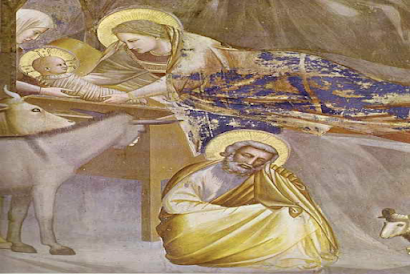
Image: Giotto Nativity

Thursday, November 25, 2021

First Sunday of Advent_C - To You, O Lord, I Lift My Soul_112821


Deacon Tom Writes,
“To You, O Lord, I Lift My Soul”

First Sunday of Advent, Year C

In the silence of our Advent reflection, the words of the Prophet Jeremiah can stir our hearts with expectant hope and longing for promises to be fulfilled, for the days when, “all shall be safe and dwell secure.” For this to become a reality we must first, however, place ourselves in the presence of the Lord and breath the prayer we hear in the Responsorial Psalm today, “To you, O Lord, I lift my soul.”

Every year we all face the challenge of Advent; we need to get everything ready for Christmas, the shopping, the cooking, the visits to family and friends, the writing out of Christmas cards. And when do we stop to put it all in perspective and reflect upon the “Reason for the Season?”

This year can be different. We can break the distracting spirit of consumerism…. if we want to! We can take a tip from St. Paul and ask the Lord to make us, “increase and abound in love for one another and for all.” How our lives would change if we were to follow St. Paul’s advice! So, some questions to ask during this Holy Season are these: What holds us back from attempting to love those people in our lives that irritate us; reconciling with those family members from whom we have intentionally distanced ourselves? What prevents us from seeking the Holy or entering into the Mystery of the Incarnation? Are we afraid of the changes that an injection of love into the fabric of our lives would cause? Are we afraid of what the newborn Babe would ask of us? Are we afraid of the confrontation with self that can take place in the time we spend in holy solitude? There are a lot of reasons why we avoid silence and fill our lives with busyness. But it doesn’t have to be this way. This year can be different!!!

Jesus tells us to, “Be vigilant at all times and pray… to escape the tribulations….and to stand before the Son of Man.” This Advent gives us another chance to renew our efforts to center our lives around prayer and to create a quiet space where we can go and rest awhile with a friend, Jesus, who comes to us as a little child bearing many gifts to all who come before him singing the refrain, “To you, O Lord, I lift my soul.”

Enjoy the day!
Deacon Tom