Wednesday, July 27, 2016

Real Wealth


Deacon Tom Writes,
“Real Wealth”


St. Paul instructs us to “Think of what is above, not what is on earth”.  Good, practical advice of our need to build a spiritual legacy but, unfortunately, one in direct conflict with our earthly way of thinking. Take the man in the parable today. He is not just successful; he is very successful. He is having a bumper crop and so he makes a decision to tear down the existing barns and build bigger ones so he can store much more of his harvest. Consequently, he will acquire more and more wealth to provide a safe and secure future for himself and his family. Yet, rather than being the poster child for ingenuity and entrepreneurial enterprise, this parable ends with this enterprising farmer standing before God (to whom we must all render an account) about his spiritual net worth, or lack thereof.

Jesus tells this parable in response to a request to settle a dispute over an inheritance problem an issue we might be tempted to think is a contemporary problem. Jesus understands the dispute; we are never satisfied. He seems to have put his finger on the crux of the problem - Greed! This parable is intended to remind us that we are more than what we possess.

Two-thousand years have passed and I don’t know if we have heeded Jesus’ warning about greed. The blockbuster movie “Wall Street” is nearly twenty years old. Remember the famous scene in which Gordon Gekko (Michael Douglas) spews that classic line -“Greed is good…greed in all of its forms has marked the upward surge of mankind”. Well, if nothing else, the past twenty years has dispelled that myth.  Oh, it has worked for the top 1%, but not for everyone else. We have all witnessed and experienced the horrific damage that greed has spawned around the world. It has shattered the lives and dreams of hundreds of millions of people. It has unleashed a cynicism and hopelessness that is running rampant today. It is causing discontent and worry in the hearts of many mothers and fathers seeking to improve the quality of life for their children. No, greed is not good. It is a capital sin, one that can ruin not only this life, but steal from us that eternal life that Jesus won for us by his death and resurrection.

St. Paul writes that our lives are, “hidden with Christ in God”.  If we place our hope and trust in him, we no longer have to, “store up treasures for” ourselves, for we can claim the inheritance Jesus has secured for us, eternal life that already has begun to run its course.

Enjoy the Day!
Deacon Tom 

Thursday, July 21, 2016

God's Mercy at Work


Deacon Tom Writes,
“God’s Mercy at work”


Today Abraham is like the little Dutch boy whose valiant effort of placing his finger in the hole of the dyke averts impending disaster. Abraham’s actions are directed at averting a disaster, a spiritual one, trying to hold back God’s wrath against the people of Sodom and Gomorrah. He knows that the residents of these towns have racked up a pile of sins, yet he appeals to God not to destroy the cities. Abraham cleverly invokes God’s mercy and seeks his forbearance not to bring destruction upon the inhabitants of these places should he find 50, no 45, AHHH 40, how about 30, 20 perhaps, OK 10 innocent people in these towns. Abraham is a gifted negotiator, a skilled plea bargainer. And God, at least for the time being is compelled to listen to him, withholding his punishment while Abraham seeks out the innocent. This, to me, is a wonderful sign of God’s patience with us, his disobedient children, and his willingness to give us every chance to get things right, even though we fail time and time again. In today’s first reading we learn that God’s justice is tempered by his mercy. In teachings about God’s mercy, we learn about our need to be merciful to each other also.

As the clock runs down on this Year of Mercy it is fitting to assess the progress we have made in our efforts to expand the depth and horizons of our capacity to be merciful.  How we engage other people, what we say to them, and how we say it can have a powerful impact on them.  I have found that just a few words of kindness can reshape a stress-contorted face into a smile.  If you have ever stopped and listened to someone who wasn’t having a good day and, by doing so cheered them up, you know it doesn’t take much to make someone’s day. If we have ever reconciled with someone who has hurt us or offended us in any way, we know the healing and peace that flows from God’s mercy. As little as these actions are, they are important ways of sharing God’s grace and making his mercy visible to those around us. God indeed has infused us with his mercy so that we may share his mercy with others. When we act as God’s agents we are instruments of his mercy just as Father Abraham was intermediating between the people of his day and God…And God listens, I believe, with our ears.

Pope Francis in his Easter Urbi et Orbi address stressed the point that only mercy can save the world. How does God’s mercy come into our world except through the lives and hands of those who love him? St. Teresa of Avila (1515 – 1582) was a living testimony of this truth. Her prayer is most fitting for us today.  She prayed, “Let nothing disturb your. Let nothing frighten you. All things pass. God does not change. Patience achieves everything. Whoever has God lacks nothing. God alone suffices. Christ has no body now on earth but yours; no hands but yours; no feet but yours; yours are the eyes thorough which the compassion of Christ must look lout on the world. Yours are the feet with which he is to go about doing good. Yours are the hands with which he is to bless his people”. 

There is need for God’s Mercy all around us and no hands or feet to help but ours.  

Enjoy the day!
Deacon Tom

Image from http://www.robparkersblog.com

Thursday, July 14, 2016

Hospitality Plus


Deacon Tom Writes,
“Hospitality Plus”


Abraham knew how to entertain. He extended a humble greeting and generous hospitality to the three travelers who passed his tent in the heat of the day. He provided them with water – such a necessity in the heat of the midday sun in. He instructed Sarah to bake some bread while he had a choice steer prepared for a meal. What a great host Abraham was! This is the sort of treatment we reserve for our closest friends. This is the way God treats us, his children.

This reading from the book of Genesis caused me to reflect on the hospitality of Jesus. In grounding the Eucharistic celebration in the context of a public banquet to which everyone is invited, Christ offers us hospitality not only for this life, but also for the life to come. Christ is our nourishment in the Eucharist banquet shared as though we are one big family invited to center our thoughts and actions on him and not be “anxious and worried about many things” as Martha was in our gospel. We all know that this is much more difficult to do than it sounds, don’t we? Our minds are constantly full of the needs of the day… the bills to pay, the stress at work and at home, sick parents or children, conflicting schedules… there are so many things to do and so many concerns weighing heavily on our minds that it is difficult to be aware of the Spiritual realities taking place before us at Mass. And yet, this is the best possible way for us to find some relief from the worries and anxieties that we face.

When we respond to the hospitality Jesus offers us, we gain new insight into the reality around us. This is why I believe that Paul can say, “rejoice in my sufferings for your sake”. Paul was able to connect with, “the mystery hidden from ages and from generations past” because he had experienced Jesus’ bountiful hospitality that eventually led him into an intimate relationship with Christ that enabled him to see beyond his physical pain and suffering.

As we gather for picnics and celebrations this summer, as we extend hospitality to our family, friends and neighbors, let us be mindful of the open invitation we have to break bread together with our friends and neighbors every time we go to Mass where Jesus has set a place for us at his Table and waits for us to share our fears, worries, and struggles with him.

Enjoy the Day!
Deacon Tom


Image Credit: The Hospitality of Abraham  - basilica of San Vitale in Ravenna, Italy on revsshaffer. com

Thursday, July 7, 2016

Help Is On The Way!


Deacon Tom Writes,
“Help Is On The Way!”


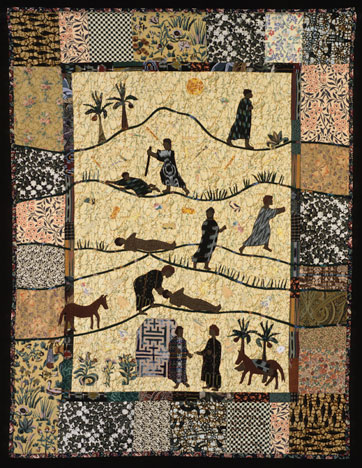
Today’s gospel tells the story of the Good Samaritan in which Jesus gives us a graphic example on how we must act to fulfill the greatest of the commandments. The Samaritan is a virtuous man; he acts with compassion, gentleness, generosity, humility, self-sacrifice, self-discipline, justice, courage, respect, and patience. His actions are unlike those of the priest and the Levite who ignore the victim on the side of the road and go on their merry way. 

Why do we do the things that we do? The simple answer is that we get in the habit behaving in a certain way. Habits are our way we respond to certain situations. I suspect helping others came naturally to the Samaritan. He had, as we say, a habit of lending a helping hand. We acquire habits through our repeated action. We start out behaving a certain way and, as we repeat those same actions, they become habits. Habits can be for the good or for the bad. Throughout our childhood, hopefully, we are taught to act with kindness so we can develop the habit of being kind. The same goes for being polite, courteous, friendly, and compassionate., etc. As we grow to maturity hopefully we have acquired greater capacity to act more virtuously. Our life’s activities reflect the qualities of our interior moral life – we are either acting according to the good virtues we have stored up or the vices that oppose them

The Greek word for virtue means “habitual excellence” which suggests that virtues need to be practiced constantly. St. Thomas Aquinas, the foremost proponent of an ethics of virtue, said that through repetition virtues bring about a “modification of a subject”. In other words, practicing virtue makes us virtuous.

The power of the virtues is that through their possession and exercise we reach the intended purpose of our lives which happens to be the very question the scholar of the law asks Jesus today, “Teacher, what must I do to inherit eternal life?”

To help us in our efforts to inherit eternal life, the Fathers of the Church have handed down some very good tools to help guide us. We have three “Theological” Virtues – Faith, Hope, and Charity and four “Cardinal” Virtues of Prudence, Fortitude, Justice, and Temperance. 

There is much suffering in our world today that cries out for an increase in the practice of these virtues by people of all faiths. May the story of the good Samaritan motivate us to live more virtuous lives so we can be more faithful to our Christian heritage and help ease the suffering of our sisters and brothers in Christ.

Enjoy the Day!
Deacon Tom


Image Credit – Lee Porter: The Good Samaritan 1, 1993

Friday, July 1, 2016

Travelling Light Today

Deacon Tom Writes,
“Travelling Light”


In today’s gospel Jesus gives his disciples some challenging instructions before sending them out to the towns and villages he intended to visit. He tells them “Go on your way; behold I am sending you like lambs among the wolves. Carry no money bags, no sack, no sandals; and greet no one along the way”. It’s no wonder “the laborers are few!” And yet, surprisingly, 72 responded to the call; 72 brave souls willing to venture out into the world; relying upon nothing but God’s goodness to take care of all their needs. 

What a test of faith. Imagine these disciples starting out on a journey with no money, no carry-on, nothing but the clothes they were wearing. Sounds unrealistic, doesn’t it? But that’s the urgency that Jesus gave to his ministry – announcing the Good News that the Kingdom of God was at hand. People longed to hear this message and Jesus was eager to spread hope and show visible proof that the reign of God had dawned on earth. Nothing was more important, so no need to waste time with the things of this world…money, baggage, and extra clothes. God will take care of everything. God will provide; He always does.

Just recently I met a woman who came to Florida from Pennsylvania to be with her dying sister. When she got the call that her sister was ill, she packed her bag and, through the kindness of a friend, was able to get an airline ticket. She had $50 in her pocket, and no credit card. For 9 days and nights she sat by her sister’s side, never leaving. Staff from the hospice facility brought her food that they provided from their own generosity; the funeral director made all the arrangements to provide cremation services and transportation of the cremains to Pennsylvania. No bill was rendered. A hotel room was provided for the evening before her return flight back to Pennsylvania. In other words, all this woman’s needs were provided for by total strangers!. What is truly amazing is that this lady did not ask for a thing. She sat by her sister’s side and waited patiently for her life to pass. 

This simple person left her home placing her trust in God…. Some would say this was pure foolishness. I stand in awe. What great faith!

In the Old Testament most people lived in pure poverty, struggling to obtain the meager necessities of life. They are referred to as the “anawim” of God. They trusted in God for everything; They placed all their hope in God. We all could learn from them and from these first eager co-workers of Jesus. How? By ourselves trusting in God more and relying upon our possessions less; trusting in God’s divine providence and care and knowing he is always by our side, especially when things seem to be at their worst, at that proverbial “darkest hour”. What a wonderful world it would be if we could dedicate our lives to doing God’s bidding as we go about our day-to-day activities. Giving food and drink to those who hunger and thirst, being aware of someone’s needs and responding to them, listening to a stranger tell their story, spending time in a convalescent home or hospice. This sensitivity to the needs of those around us and our willingness to help as best we can enables us to be instruments of God’s love, mercy, and compassion. Yes, we would have reasons to rejoice and be glad for all the good things we could do in Jesus’ name, if, and it’s a big if, we choose to abandon all earthly vestiges of power and go about our daily business with the only things that really mattered, the Mind, the Heart, and the Love of Jesus, our Lord.

Enjoy the day!
Deacon Tom 

Friday, June 24, 2016

Come, Follow Me!

Deacon Tom Writes,
“Come, Follow Me!”


We read several occasions today of people who wanted to follow those holy men who crossed their paths. First Elisha was willing to leave everything to follow in the footsteps of the Prophet Elijah. In the New Testament someone calls out to Jesus, ‘I will follow you wherever you go’”. It’s easy to understand how this happened. People were amazed at the miracles these men of God performed. In Jesus’ case people saw with their own eyes the great miracles that he worked; they witnessed firsthand the gentleness and great compassion with which he treated people, not just his own but non-Jews also. They personally experienced his genuineness and sincerity of heart. They felt welcomed and comfortable in his presence. And, they wanted to stay in that comfort zone long as they could. At first glance it is easy to understand why they wanted to remain with Jesus. But remember, Jesus wasn’t peddling la dolce vita. Jesus tells them up front that following him would lead them on a challenging and difficult journey, “Foxes have dens and birds of the sky have nests, but the Son of Man has nowhere to rest his head”. In other words, Jesus wanted to spell out that the road ahead wouldn’t be easy, that to be a disciple, one must do as he did – pick up our crosses and follow him.

We know that being a follower of Jesus is difficult. We don’t do a good job of denying ourselves or taking up our crosses, right? Having a discipleship mentality puts us at odds with the “real world” where all of our efforts go to build ourselves up, let everyone know just how great we are or show them how much we have accomplished. That’s really the only way to get ahead in life…this life, that is. The very fact that we strive so much to succeed puts us in direct competition with everyone else and it is those basic struggles of life that often breed resentments and envy, difficult vices that challenge and undermine our faith. They don’t have to, but truthfully, they often do.

So, what’s the secret to living an authentic Christian life in our day and age? One way is to distinguish between what we want and what we truly need. Our wants are generally insatiable. Our needs are fairly basic and so much more easily attainable. If we are able to seek only what we need, we can begin to imitate the spirit of simplicity and freedom of Jesus. With less focus on our own needs and concerns, perhaps we can increase our love for one another, which puts us on track to practice the greatest commandment… loving God and our neighbors as ourselves. This is how we begin to deny ourselves and open ourselves to the good things that God has in store for us, those things not present in our world, but rather those treasures that flow from the kingdom of God that are for everyone and that last forever – everlasting… Joy, ……Peace, and Happiness.

Enjoy the day!

Deacon Tom

Saturday, June 18, 2016

What The World Needs Now

Deacon Tom Writes,
“What The World Needs Now”


Around the year 520 BC the Prophet Zechariah prophesied that one day the Lord would, “pour out…a spirit of grace and petition” upon his people. He was referring to a distant time when God’s grace would become visible in the person of Jesus Christ. Hearing these words today encourages us to awaken within us that “spirit of grace and petition” to renew our hope and energize our spirit so we may confront the hopelessness and despair that seems to be on the increase in our world. Yes, what our world needs now is a profusion of that “spirit of grace and petition” that only God can give.

We know that Grace is God’s gift freely given to us, but that does not mean that we should not ask him to send it our way! Grace is a gift from God that enables us to live in harmony with God, with all of humanity, and with all of creation. Grace breaks down the harness of our hearts and opens our souls to share God’s love, mercy, and compassion. Grace moves us gradually to be able to forgive others and ourselves, frees us from the need to retaliate for the wrongs done to us, or to exact revenge from our enemies. Grace draws us toward God via our brothers and sisters in Christ and away from our self-centered obsession. Zechariah was writing about each generation’s need for God’s grace, not just for the people of antiquity.

Life has always been difficult. It has never been easy, just read the bible or open a history book. Through mass media we hear of the suffering of people in all parts of the world because of violence, cruelty beyond imagination, natural calamities, and religious zealotry. For so many people today, there is a deepening sense of hopelessness, an increase in cynicism that has caused many to abandon their faith or to have any faith whatsoever that there is an absolute wisdom governing and sustaining all creation. We seem to have lost our profoundly Christian belief that we are “Children of God” as St. Paul tells us. This is the real tragedy of our day, that so many have turned their backs to God and to each other!

As people of faith we should seize every chance we have to ask God to fill us with a “spirit of grace”. We should not hesitate to ask God to make good on his promise “to pour out his spirit of grace and petition” on us so that we may have the courage and strength to respond to the challenges of our times and to be a people of hope, a people who let the light of Christ shine in us and through us to all those around us. Yes, what the world needs now until the end of time is God’s grace and people who thrive in it.

Enjoy the day! And, Happy Father’s Day to all the dads, grandpas and great-grandpas…


Deacon Tom